
Air source heat pumps, are they really worth it
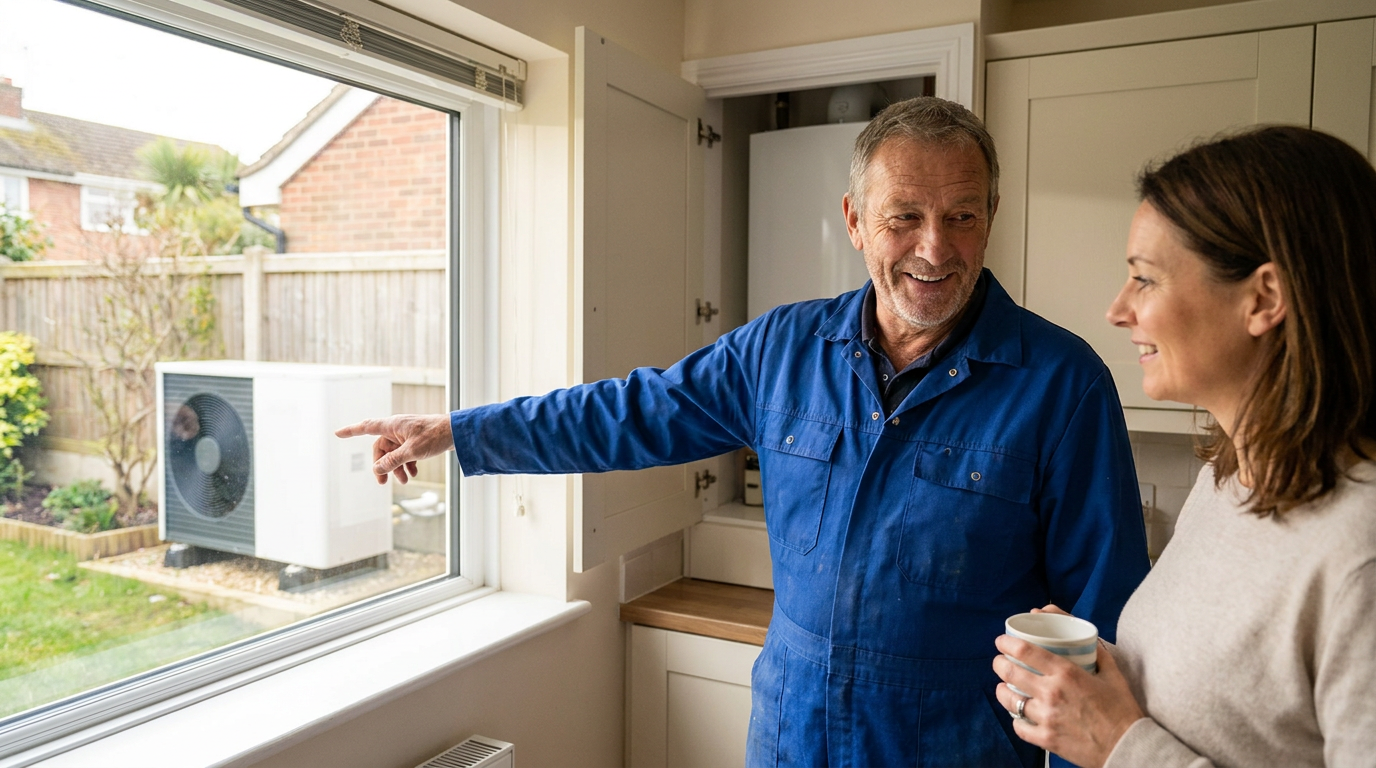
Air source heat pumps can cut carbon and heat homes efficiently, but they are not right for every property. Here’s what to check before replacing a boiler.
Air Source Heat Pumps: The Positives and Negatives
Air source heat pumps are becoming an increasingly common alternative to gas and oil boilers. They can heat a property efficiently and reduce its carbon emissions, but they are not automatically the right choice for every home.
As heating engineers, we believe homeowners should understand both the benefits and limitations before making a decision. The quality of the design and installation is just as important as the heat pump itself.
What is an air source heat pump?
An air source heat pump—often shortened to ASHP—takes heat from the outside air and transfers it into your home.
It uses electricity to operate, but it does not create heat in the same way as an electric heater. Instead, it moves existing heat from outside into the heating system. This means a correctly designed heat pump can deliver several units of heat for each unit of electricity it uses.
Most domestic air source heat pumps heat water that circulates through radiators or underfloor heating. They can also heat the water stored in a hot-water cylinder.
They continue working during cold weather, although their efficiency and output can reduce as the outside temperature falls.
The positives of air source heat pumps
High efficiency
A well-designed heat pump can be much more efficient than a traditional boiler. The Energy Saving Trust says heat pumps can be more than three times as efficient as gas or oil boilers.
However, this efficiency depends on the whole system being designed and set up correctly.
Lower carbon emissions
An air source heat pump does not burn gas or oil at the property. As more UK electricity is produced from renewable sources, the carbon emissions associated with running a heat pump should continue to reduce.
For homeowners looking to move away from fossil fuels, this is one of the main attractions.
No gas supply is required
A heat pump can be particularly attractive for properties that are not connected to the gas network and currently rely on oil, LPG or direct electric heating.
There is no need for a gas meter, oil tank or regular fuel deliveries.
Consistent heating
Heat pumps generally work best when maintaining a steady temperature over longer periods. When designed properly, this can create comfortable and consistent heat throughout the property.
They work especially well with underfloor heating and correctly sized radiators because these can provide enough heat while operating at lower water temperatures.
Government support may be available
At the time of writing, eligible homeowners in England and Wales may be able to receive £7,500 towards an air source heat pump through the Boiler Upgrade Scheme.
Eligibility and funding can change, so homeowners should check the latest government guidance before committing to an installation.
Less dependence on a combustion appliance
There is no combustion process inside an air source heat pump and no boiler flue. This removes certain risks associated with burning gas or oil, although the system still requires professional installation and maintenance.
The negatives of air source heat pumps
Higher installation cost
An air source heat pump will normally cost more to install than a straightforward boiler replacement.
The outdoor unit is only one part of the job. The installation may also require a hot-water cylinder, larger radiators, new pipework, electrical work and alterations to the existing heating system.
The final cost depends heavily on the property and what is already installed.
Running costs are not guaranteed to be lower
A heat pump is highly efficient, but electricity usually costs more per unit than gas. This means installing a heat pump does not automatically guarantee lower energy bills.
Running costs will depend on:
- The heat loss of the property
- The size and efficiency of the heat pump
- Radiator and pipework sizing
- The required flow temperature
- Heating controls and system settings
- The electricity tariff
- The heating system being replaced
Replacing old electric, LPG or oil heating may produce better savings than replacing a modern gas boiler. Every property needs to be assessed individually.
Some radiators may need replacing
Boilers can send very hot water through relatively small radiators. Heat pumps are generally most efficient when circulating water at a lower temperature.
This may mean that some existing radiators need to be replaced with larger or higher-output models. In certain homes, pipework may also need upgrading to provide the required water flow.
A proper room-by-room heat-loss calculation should be completed before choosing the heat pump and radiators.
Space is needed
An air source heat pump requires an outdoor unit with sufficient airflow around it. The location must also consider appearance, access, noise and the effect on neighbouring properties.
Most systems also require a hot-water cylinder inside the property. This can be a disadvantage for homes that currently have a combi boiler and no suitable cylinder space.
They operate differently from boilers
A boiler can heat radiators quickly at a high temperature. A heat pump usually provides gentler heat over a longer period.
Homeowners may need to change the way they use their heating. Constantly switching it on and off or demanding a rapid increase in temperature can reduce comfort and efficiency.
This does not mean the house should feel cold. A correctly designed system should maintain the chosen temperature, but it may do so differently from a gas boiler.
Poor design produces poor results
Many complaints about heat pumps are caused by unsuitable design, incorrect sizing or poor commissioning rather than the technology itself.
A unit that is too small may struggle during cold weather. One that is badly controlled or required to run at an unnecessarily high flow temperature may use more electricity than expected.
The installer should assess the complete property—not simply remove the boiler and connect a heat pump in its place.
Does a house need to be fully insulated?
A home does not have to be newly built or perfectly insulated to use a heat pump. However, reducing unnecessary heat loss can allow the system to work at lower temperatures and cost less to run.
Loft insulation, draught reduction and suitable glazing should be considered as part of the overall heating plan. Older properties can still use heat pumps, but they may require more careful design and larger heat emitters.
Is an air source heat pump worth it?
An air source heat pump can be an excellent heating system when it is correctly designed for the property. It can offer efficient, comfortable heating while reducing dependence on fossil fuels.
However, it should not be sold as a simple box replacement for every boiler. The building’s heat loss, radiators, pipework, hot-water requirements and available space all need to be considered.
Before agreeing to an installation, ask to see the room-by-room heat-loss calculations, proposed radiator sizes, design flow temperature and estimated electricity consumption.
The best heating system is not necessarily the newest technology. It is the system that has been properly designed for the home and the people living in it.
Dales Boiler Services provides experienced advice on boilers, heating systems and energy-efficient upgrades throughout Brighton, Hove and the surrounding areas.