
Cleaner heating, warmer home, lower bills.
Professional powerflushing that restores your central heating from the inside out. Family-run Gas Safe engineers with over 25 years' experience serving Brighton, Hove and Sussex homeowners.
What is powerflushing — and why does your system need it?
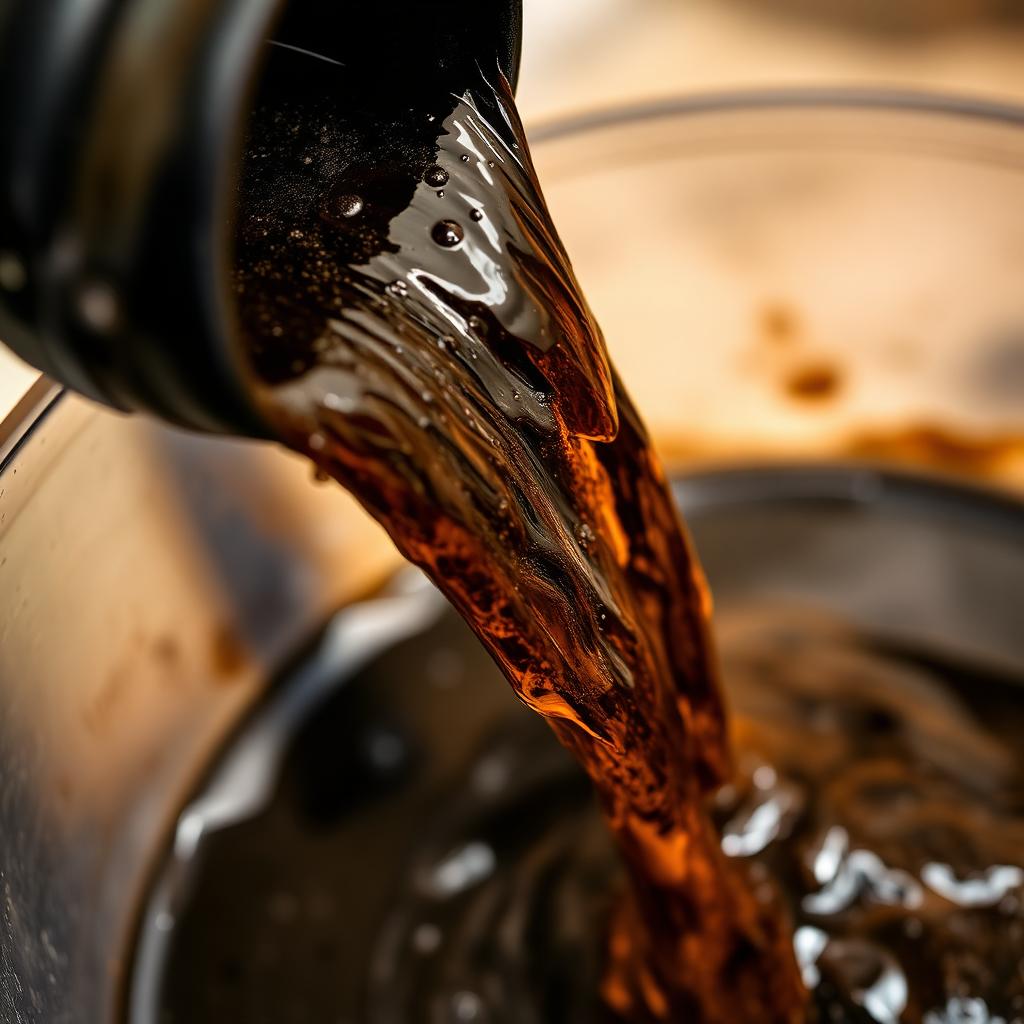
Central heating systems circulate hot water through steel radiators and copper pipe. Over the years, tiny amounts of oxygen react with the steel to form iron oxide — a thick, black, magnetic sludge that gradually settles at the low points of your system. It sinks to the bottom of radiators (why they feel cold at the bottom but warm at the top), thickens inside pipework and can eventually cake the inside of your boiler's heat exchanger.
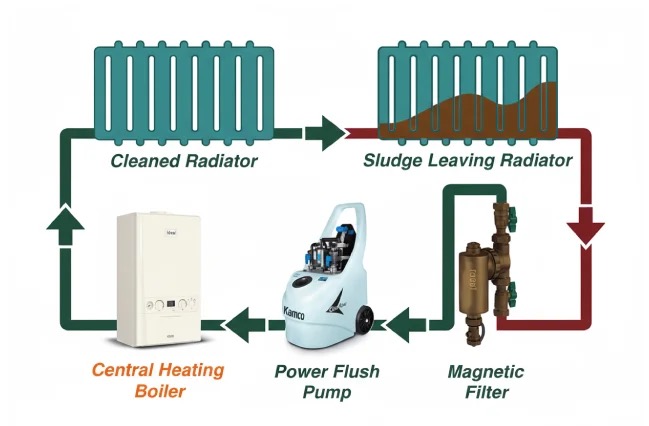
A powerflush is the only reliable way to clear it. Using a purpose-built pump, magnetic filtration and industry-approved cleaning chemicals, we push high-flow water through every radiator in turn until the return water runs clear. Ordinary chemical cleans and DIY additives don't have the flow rate or filtration to shift established sludge — that's why professional equipment matters.
The long-term benefits are significant: warmer radiators, quieter boilers, lower gas bills, fewer breakdowns and a system that lasts noticeably longer.
Signs you may need a powerflush
If any of these sound familiar, sludge is almost certainly the cause. Catching it early is the difference between a straightforward powerflush and a full boiler replacement.
Rooms that never quite reach temperature, or radiators that stay cool despite the heating running for hours.
The classic sludge symptom — hot water is flowing above a settled layer of iron-oxide deposits.
Banging, kettling or gurgling noises are almost always caused by sludge insulating the heat exchanger.
Black or dark brown water when bleeding a radiator is a clear sign of heavy iron-oxide contamination.
The system takes far longer to warm up than it used to — flow is being restricted by deposits.
A circulation pump that hums, seizes, or has been replaced recently is usually working against a sludged system.
Frequent boiler faults, lockouts and callouts often trace back to a dirty, poorly flowing system.
Some rooms boiling hot, others barely warm — sludge is diverting flow away from the worst-affected radiators.
Rising gas usage without a change in habits usually means your boiler is working harder to overcome poor flow.
Constantly needing to bleed air from radiators can indicate corrosion and gas build-up caused by sludge.
The benefits of a professional powerflush
A one-off investment that pays for itself in lower bills, fewer callouts and a heating system that behaves the way it should.
Clean pipework and radiators let hot water circulate freely, so your system delivers heat where it's needed without struggling.
A clean, free-flowing system heats up faster and holds temperature longer — customers typically see 8–10% savings on gas.
No more waiting half an hour for the house to feel warm. Once sludge is gone, mornings start comfortable in minutes.
Every radiator reaches full temperature evenly — top to bottom, front room to back bedroom.
Sludge is the number-one cause of premature heat exchanger and pump failure. Removing it can add years to your boiler's working life.
Most 'boiler won't fire', 'boiler kettling' and pump seizure callouts trace back to a dirty system. A flush prevents them.
Consistent flow, quieter operation and dependable heat — the kind of heating system you stop having to think about.
Worcester, Vaillant, Ideal and Baxi all require a clean, inhibited system to honour their warranty. A powerflush protects your investment.
See a powerflush in action
A real demonstration of what a professional powerflush actually involves — from equipment set-up to the visible improvement in water quality.
Our seven-step powerflushing process
A methodical, professional approach refined over 25 years of servicing Brighton and Hove homes.
We arrive on time, protect your floors with dust sheets, and thoroughly inspect your boiler, controls, pipework and every radiator before touching anything.
Each radiator is checked with a thermal reading so we can identify cold spots, poor flow and the worst-affected areas of your system.
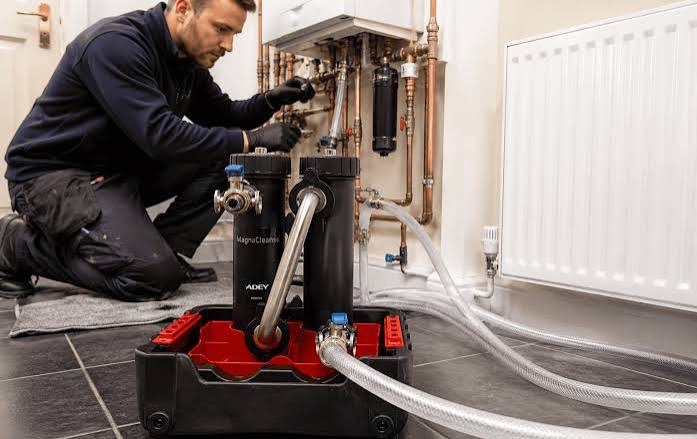
Our commercial-grade powerflush pump is connected directly to the pipework or across the boiler, using safe high-flow, low-pressure operation.
Sentinel cleaning chemicals are dosed into the system while our twin MagnaCleanse magnets capture iron-oxide sludge as it lifts from the pipework.
We reverse-flush each radiator in turn, agitating trapped deposits until the return water runs completely clear.
The system is refilled with fresh water and dosed with Sentinel X100 inhibitor — protecting against future sludge and extending the life of every component.
We re-pressurise, bleed, balance and fully test the system, then hand over a written before-and-after water quality report for your records.
Why homeowners choose Dales Boiler Services
Family-run and local since 1998 — thousands of Brighton and Hove heating systems restored.
Every engineer is on the Gas Safe register — the legally required qualification for gas work.
Commercial-grade Kamco and Fernox powerflush pumps with twin MagnaCleanse magnetic filters.
If your system doesn't need a flush, we'll say so. We only recommend work that genuinely benefits you.
Fixed prices agreed before we start. No last-minute extras, no vague estimates, no surprises.
We arrive when we say we will, and we finish the job properly the same day wherever possible.
Careful, methodical, protective of your home — the way heating engineers used to work.
£2M public liability cover on every job, for total peace of mind.
Approachable, patient and happy to explain what we're doing and why. Rated 5 by Brighton homeowners.
When is powerflushing recommended?
Not every heating problem needs a flush — but when it's the right solution, nothing else will restore a system as thoroughly. Here's when we'd suggest one.
Most manufacturers require a clean, inhibited system to validate their warranty. A pre-installation flush protects your investment from day one.
Rooms that don't warm up properly, uneven temperatures or slow response times all indicate restricted flow.
Systems more than 8–10 years old, especially those without a magnetic filter, almost always benefit from a professional clean.
Radiators that stay cold at the bottom, or entire rooms that never reach temperature, are classic sludge symptoms.
Banging, gurgling and kettling noises are usually caused by sludge disrupting normal water flow through the boiler.
Frequent lockouts, pressure drops or pump issues often trace back to a contaminated system — the flush fixes the root cause.
Professional equipment, industry-approved chemicals
We invest in commercial-grade powerflush equipment because it's the only way to consistently deliver results homeowners can feel. Twin MagnaCleanse magnets capture iron oxide the moment it lifts, and we exclusively use Sentinel-branded cleaners and inhibitors — the same range Worcester Bosch, Vaillant, Ideal and Baxi recommend to keep their warranties valid.
- Kamco / Fernox commercial powerflush pumps
- Twin MagnaCleanse magnetic filtration
- Sentinel X400 rapid system cleaner
- Sentinel X100 long-life corrosion inhibitor
- TDS meter for before / after water quality proof

Wondering what a service covers? Ask Dale before you book.
Rated 5 by Brighton & Hove homeowners
"Our upstairs radiators had been lukewarm for years — I'd almost given up. Dales did a full powerflush in a day, protected everything and the difference the next morning was extraordinary. Every radiator is now piping hot."
"Professional from start to finish. They explained the process clearly, showed me the water quality before and after and gave me a proper printed report for my Worcester warranty. Fair price and genuinely nice people."
"Booked a powerflush before our new boiler went in. The engineer was punctual, tidy and clearly knew his trade — 25 years' experience really shows. The new heating runs beautifully and the house warms up in minutes now."
Honest advice, fixed pricing, real proof.
We've been looking after central heating systems across Brighton and Hove since 1998, and we've built our reputation on doing things properly. Every powerflush is quoted at a fixed price before we start — no surprise extras, no "we found something else" charges once we're halfway through.
You'll get a before-and-after water quality reading and a printed report you can keep for your boiler warranty file. That's how a professional powerflush should be delivered — and it's how we've been doing it for a quarter of a century.
Frequently asked questions
What is a powerflush?
A powerflush is a professional deep-clean of your central heating system. Using a high-flow, low-pressure pump combined with magnetic filtration and specialist cleaning chemicals, we push clean water through every radiator and pipe in turn — dislodging iron-oxide sludge, limescale and debris until the return water runs clear. The result is a heating system that behaves like new.
How long does a powerflush take?
For a typical Brighton or Hove home with 6–8 radiators we allow 4–6 hours. Larger properties, older systems or particularly heavy sludge can extend to a full working day. We always give you a realistic time-frame before we start so you can plan around it.
Will a powerflush reduce my heating bills?
In most cases, yes. A sludged system forces your boiler to work harder and run longer to reach temperature. Once the system is clean, water flows freely and radiators heat evenly — customers typically see gas usage drop by around 8–10% compared with a heavily contaminated system.
Is powerflushing messy?
Not when it's done properly. All dirty water is captured inside our sealed powerflush pump and hoses — nothing spills onto floors or carpets. We lay dust sheets, protect skirting boards and leave your home exactly as we found it.
How often should a heating system be powerflushed?
Most well-maintained systems need a powerflush every 5–10 years, though this depends on water quality, system age and whether a magnetic filter is fitted. An annual boiler service will pick up early signs of sludge long before a flush becomes urgent.
Can every heating system be powerflushed?
The vast majority of modern sealed and open-vented systems can be safely powerflushed. Very old cast-iron systems, gravity-fed set-ups or pipework in poor condition may need a gentler chemical clean instead — we'll inspect first and always recommend the right approach for your system.
Does a new boiler need a powerflush?
If you're upgrading to a new boiler on an existing system, most manufacturers — including Worcester Bosch, Vaillant, Ideal and Baxi — require the system to be thoroughly cleaned to keep the warranty valid. A powerflush before installation protects your investment and gives the new boiler the best possible start.
Will powerflushing fix cold radiators?
In the majority of cases, yes. Cold spots, cold-bottom radiators and rooms that never quite warm up are almost always caused by sludge restricting flow. A powerflush clears the blockage and restores full heat output. If a radiator remains cold afterwards, the valve or thermostatic head is usually the culprit — and we'll diagnose that too.
Ready to bring your heating back to life?
Fixed pricing, all chemicals and MagnaCleanse included. Speak to a Gas Safe engineer with 25+ years' local experience.