Winter Boiler Settings to Save Money | Dales Boilers
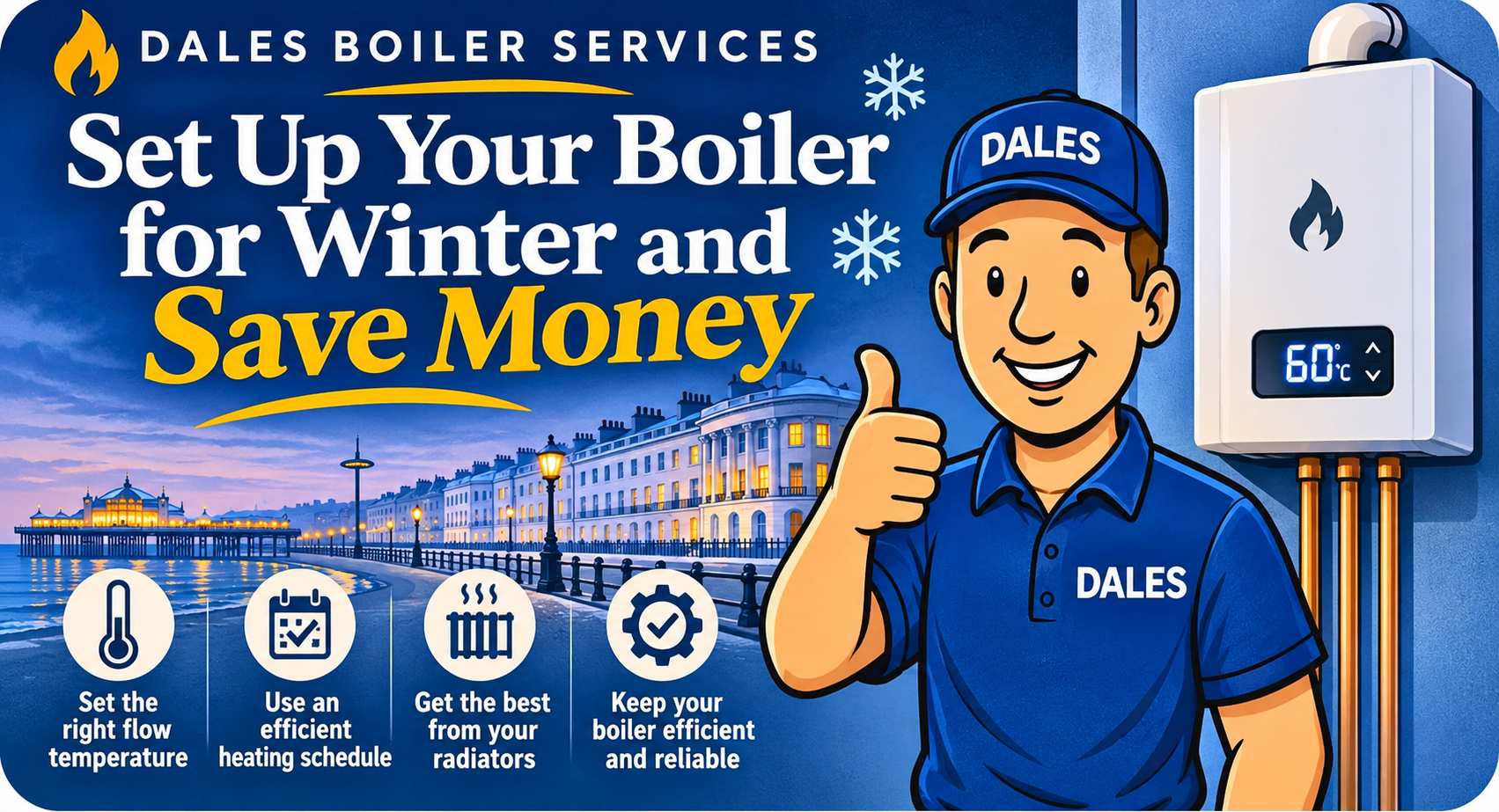
Set your boiler up for winter with simple changes to flow temperature, thermostats, TRVs and timers. These practical tips can help reduce gas use while keeping your home comfortable.
How to Set Up Your Boiler for Winter and Save Money on Heating Bills
Simple boiler adjustments that could reduce your energy bills, improve heating efficiency and keep your home warm throughout winter.
As temperatures drop across Brighton, Hove, Worthing and Sussex, many homeowners simply turn up their heating without considering how efficiently their boiler is operating.
However, making a few simple adjustments to your boiler and central heating system could reduce your gas consumption without compromising comfort.
At Dales Boiler Services, we believe that understanding how your heating system works is the first step towards saving money.
- Reduce Your Boiler Flow Temperature
One of the most effective ways to improve the efficiency of a modern condensing combi boiler is to reduce its central heating flow temperature.
The flow temperature is the temperature of the water your boiler sends around your radiators. It is different from the temperature you set on your room thermostat.
Many boilers are unnecessarily set between 75°C and 80°C.
As a general starting point:
- 50–55°C: Milder winter days and well-insulated properties.
- 60–65°C: Typical winter conditions.
- 65–75°C: Colder weather or properties that struggle to reach the desired room temperature.
Lower flow temperatures can help your boiler operate in condensing mode more frequently, recovering heat that would otherwise escape through the flue.
Start at 60°C and adjust gradually to suit your property.
Important: If you have a separate hot water cylinder, different temperature requirements apply. Do not reduce the cylinder storage temperature below 60°C without professional advice.
- Set Your Room Thermostat Correctly
Turning your thermostat up higher will not normally heat your home any faster. It simply tells your heating system to continue operating until a higher temperature is reached.
Recommended starting temperatures are:
- Living areas: 18–21°C.
- Bedrooms: 18°C.
- Unoccupied rooms: 16–17°C, where appropriate.
Reducing your room thermostat by just 1°C could make a noticeable difference to your annual heating bills.
Older people and those with certain health conditions may require warmer indoor temperatures.
- Use Your Heating Programmer Efficiently
Leaving your heating running all day at your normal comfort temperature is generally more expensive than heating your home when you need it.
A typical winter heating schedule might look like this:
Time Heating setting 6:30 am 20°C 8:30 am 16°C 4:30 pm 20°C 10:30 pm 16°C
Adjust these settings to suit your lifestyle, property insulation and household needs.
Smart heating controls such as Hive, Nest, Vaillant sensoHOME and Worcester Bosch EasyControl can help you manage your heating more effectively.
Compatible load-compensating and weather-compensating controls can also improve boiler efficiency by automatically adjusting heating flow temperatures.
- Understand Your Thermostatic Radiator Valves
Thermostatic radiator valves, commonly known as TRVs, allow you to control the temperature of individual rooms.
Typical TRV settings are:
Setting Approximate temperature 1 12°C 2 16°C 3 20°C 4 24°C 5 Maximum
Actual temperatures vary between manufacturers.
Avoid heating unused rooms unnecessarily, but do not allow them to become excessively cold, as this can encourage damp and condensation.
Radiators should not be covered by curtains or obstructed by furniture, as this can restrict heat distribution and affect temperature sensing.
- Check Your Boiler Pressure
Low boiler pressure can prevent your central heating system from operating correctly.
Most sealed domestic heating systems should have a cold pressure of approximately 1.0–1.5 bar, although you should always follow your manufacturer’s instructions.
Signs of a pressure-related problem include:
- Radiators not heating properly.
- Boiler fault codes.
- Heating cutting out.
- Regularly having to top up the system.
If your boiler continually loses pressure, there may be an underlying fault that requires investigation by a qualified heating engineer.
- Bleed and Balance Your Radiators
Are some radiators hot while others remain cold?
Radiators that are cold at the top may contain trapped air, while radiators that are cold at the bottom may indicate sludge or restricted circulation.
Balancing your radiators ensures that heated water is distributed more evenly throughout your property.
A correctly balanced central heating system can:
- Improve heat distribution.
- Reduce unnecessary boiler cycling.
- Improve household comfort.
- Help your boiler operate more efficiently.
If your heating system contains significant sludge, professional cleaning or power flushing may be beneficial.
- Turn Off Your Combi Boiler’s Preheat Function
Many modern combi boilers have a hot water preheat or comfort function.
This keeps part of the boiler warm so that hot water can be delivered more quickly when you open a tap.
Although convenient, it can result in additional gas consumption throughout the day.
Selecting ECO mode, where available, can reduce this unnecessary energy usage. You may simply have to wait slightly longer for hot water.
Check your boiler manufacturer’s instructions before changing this setting.
- Protect Your Condensate Pipe from Freezing
During freezing weather, external condensate pipes can freeze and cause your boiler to stop working.
Common symptoms include gurgling noises, boiler lockouts and fault codes.
To reduce the risk:
- Ensure external condensate pipes are suitably insulated.
- Have incorrectly installed condensate pipes inspected.
- Keep your boiler’s frost protection function operational.
- Avoid switching off the boiler’s electrical supply during freezing conditions.
Remember that built-in boiler frost protection may not protect your entire central heating system.
- Reduce Heat Loss Around Your Home
Even the most energy-efficient boiler will consume more gas if your property loses heat quickly.
Simple improvements include:
- Draught-proofing doors and windows.
- Closing curtains after sunset.
- Improving loft insulation.
- Insulating accessible heating pipes.
- Keeping radiators unobstructed.
- Maintaining adequate ventilation to prevent damp.
The longer your home retains heat, the less work your boiler needs to do.
- Have Your Boiler Serviced Annually
An annual boiler service helps ensure your appliance is operating safely and correctly.
A Gas Safe registered heating engineer can identify developing faults, check combustion performance and assess the general condition of your boiler.
At Dales Boiler Services, we can also advise on suitable boiler settings, heating controls and central heating improvements to help reduce unnecessary energy consumption.
How Much Money Could You Save?
Even a modest reduction in gas consumption can make a difference over an entire winter.
For example, based on annual gas expenditure of £1,200:
Reduction in gas expenditure Potential annual saving 5% £60 10% £120 15% £180 20% £240
These are illustrative figures rather than guaranteed savings. Actual results depend on your boiler, property, existing settings, energy tariff and heating habits.
Frequently Asked Questions
What is the best boiler temperature for winter?
For a modern condensing combi boiler, a central heating flow temperature of around 60°C is a good starting point. Increase it if your home cannot reach the desired room temperature.
Is it cheaper to leave the heating on all day?
Generally, no. Using a heating schedule and reducing the temperature when heating is not required will usually reduce heat loss and energy consumption.
Does turning down the boiler temperature save gas?
Yes, in many modern condensing boilers. Lower flow and return temperatures can improve efficiency by allowing the boiler to recover more heat from its combustion gases.
Why is my boiler using so much gas in winter?
Common causes include excessive flow temperatures, poor insulation, inefficient heating controls, restricted circulation and increased heating demand during cold weather.
Should I turn my boiler off at night?
It is generally better to use your heating programmer or thermostat to reduce the temperature overnight rather than disconnecting the boiler’s electrical supply, particularly during freezing weather.
Get Your Boiler Winter Ready with Dales Boiler Services
With over 25 years of industry experience, Dales Boiler Services provides professional boiler and central heating services throughout Brighton, Hove, Worthing and the surrounding Sussex areas.
Our services include:
- Boiler servicing and repairs.
- Energy-efficient boiler installations.
- Central heating diagnostics.
- Smart thermostat installations.
- Radiator balancing.
- Central heating power flushing.
- Heating efficiency advice.
Whether you have a Vaillant, Worcester Bosch, Glow-worm, Ideal or Baxi boiler, we can help you get the most from your heating system.
Stay warm, use less energy and avoid unnecessary heating costs this winter.
Visit www.dales-boilers.co.uk to arrange a boiler service or discuss improving your central heating efficiency.
Dales Boiler Services – Your local Gas Safe registered boiler and heating specialists.